RateCaptain
  • Home
    • About Us
    • Contact Us
  • FX Rates
  • Money Market
  • Cryptocurrency
  • Commodities
  • Corporates
No Result
View All Result
Subscribe
  • Home
    • About Us
    • Contact Us
  • FX Rates
  • Money Market
  • Cryptocurrency
  • Commodities
  • Corporates
No Result
View All Result
RateCaptain
No Result
View All Result
Home company news

Dangote Refinery Faces N32.5bn Revenue Loss Following Petrol Price Cut

Victoria Attah by Victoria Attah
March 13, 2025
in company news, Economy
Reading Time: 2 mins read
A A
0
Oil Marketers Dismiss Claims of Dangote Refinery Selling Fuel in Dollars
Share on FacebookShare on TwitterShare on WhatsappShare on Telegram

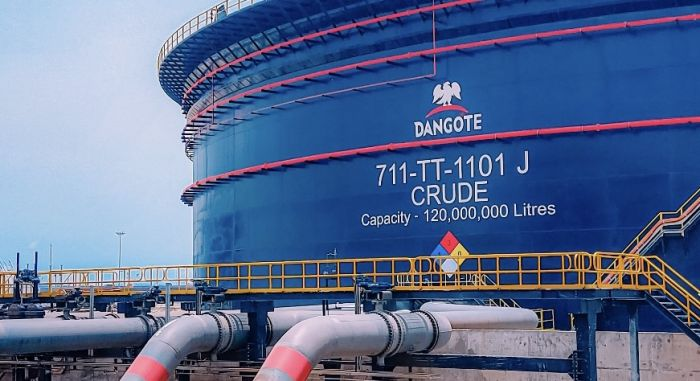
The Dangote Oil Refinery is set to incur a N32.5 billion loss due to its recent reduction in the ex-depot price of Premium Motor Spirit (PMS), commonly known as petrol.

This financial hit comes as a result of the refinery’s decision to cut petrol prices from N890 to N825 per litre despite holding a stockpile of 500 million litres before the adjustment.

AlsoRead

Naira Breaks Below N1,400 as Oil Rally and CBN Reforms Fuel Fresh Stability

Larger Disparities Boom Between Black Market and Official Rates

Emefiele’s Naira Redesign Memo Takes Centre Stage in EFCC Trial

Price Cut and Its Financial Impact

Before the price slash, the 500 million litres of petrol in the refinery’s storage was valued at N445 billion if sold at N890 per litre. However, with the new pricing at N825 per litre, the refinery’s revenue from the stock has now dropped to N412.5 billion, resulting in a N32.5 billion shortfall.

Commitment to Price Reductions

The recent price cut is part of a series of reductions implemented by the Dangote refinery. In February 2025, the company first lowered the ex-depot price by N60, followed by another N65 reduction later in the month. A similar price drop was also observed in December 2024, when petrol prices fell from N970 to N899.50 per litre during the festive season.

A statement from Dangote Petroleum Refinery emphasized that these reductions aim to ease the financial burden on Nigerians, stabilize fuel supply, and prevent the usual scarcity and price hikes experienced during festive periods.

Market Reactions and Importers’ Concerns

While Nigerians have welcomed the price cut, fuel importers and marketers are grappling with significant losses. Many importers claim that Dangote’s frequent price reductions are making fuel importation increasingly unprofitable, forcing them to sell at lower margins or incur heavy financial setbacks.

Industry estimates suggest that importers could lose N2.5 billion daily, amounting to approximately N75 billion per month due to the latest price adjustment.

Marketers with old fuel stocks have also been hit hard, as they are now forced to sell below their original purchase price, resulting in substantial losses.

Future Price Projections

With the landing cost of petrol now standing at N783.66 per litre, industry analysts predict that pump prices could drop further to N800 per litre in the near future.

Meanwhile, filling stations nationwide have started reflecting the lower prices. For instance, NNPCL retail outlets in Lagos have already adjusted their pump prices to N860 per litre.

As consumers celebrate the lower fuel costs, stakeholders continue to monitor the impact of Dangote’s pricing strategy on the broader energy market and fuel importation dynamics in Nigeria.

 

Tags: petrol
Previous Post

Naira Remains Stagnant Despite Weakening U.S. Dollar Index

Next Post

Nigeria Spends $817.4 Million on Debt Servicing in First Two Months of 2025

Related News

Angola Surpasses Nigeria, Becomes Africa’s Largest Oil Producer in August

Naira Breaks Below N1,400 as Oil Rally and CBN Reforms Fuel Fresh Stability

by Akpan Edidong
February 5, 2026
0

Nigeria’s naira has strengthened markedly in the official foreign exchange market, closing January at N1,386.55 per US dollar  its firmest...

Naira Surges Against US Dollar, Falls Below N1,000 Mark

Larger Disparities Boom Between Black Market and Official Rates

by Stephen Akudike
February 5, 2026
0

The gap between Nigeria’s official and parallel (black market) exchange rates has widened to over 6%, reviving fears of renewed...

U.S. Steps In on Emefiele Trial, Alleges Human Rights Violations

Emefiele’s Naira Redesign Memo Takes Centre Stage in EFCC Trial

by Victoria Attah
February 5, 2026
0

A 2022 memo from former Central Bank of Nigeria (CBN) Governor Godwin Emefiele seeking presidential approval for the controversial naira...

FG Allocates N5.1 Billion for Presidential Yacht and N5.5 Billion For Student Loans

Government Securities Now 11% of Nigerian Banks’ Assets as Credit Growth Lags

by Stephen Akudike
February 4, 2026
0

Nigerian banks’ exposure to government securities has risen sharply in recent years, now accounting for approximately 11% of their total...

Next Post
Decades of Operating Budget Deficits Responsible for Nigeria’s High Debt Profile, says DMO.

Nigeria Spends $817.4 Million on Debt Servicing in First Two Months of 2025

Leave a Reply Cancel reply

Your email address will not be published. Required fields are marked *

Recommended

Angola Surpasses Nigeria, Becomes Africa’s Largest Oil Producer in August

Naira Breaks Below N1,400 as Oil Rally and CBN Reforms Fuel Fresh Stability

February 5, 2026
Naira Surges Against US Dollar, Falls Below N1,000 Mark

Larger Disparities Boom Between Black Market and Official Rates

February 5, 2026

Popular Story

  • Nigeria’s Opportunity: Navigating Global Oil Surge Amid Libya’s Top Oilfield Disruption

    Oil Prices Surge Above Nigeria’s Budget Benchmark, Lifting Naira and Reserves

    0 shares
    Share 0 Tweet 0
  • Emefiele’s Naira Redesign Memo Takes Centre Stage in EFCC Trial

    0 shares
    Share 0 Tweet 0
  • Manufacturers and Employers Warn N400 Billion Investments at Risk from Sachet Alcohol Ban

    0 shares
    Share 0 Tweet 0
  • Naira Closes January at N1,386.55/$ in Official Market, Strongest Level in Nearly Two Years

    0 shares
    Share 0 Tweet 0
  • Government Securities Now 11% of Nigerian Banks’ Assets as Credit Growth Lags

    0 shares
    Share 0 Tweet 0
RateCaptain

RateCaptain

We bring you the most accurate in new and market data. Check our landing page for details.

  • Home
  • About Us
  • Privacy Policy
  • Terms & Conditions
  • Disclaimer
  • Cookie Policy
  • Contact Us

Copyright © 2022 RateCaptain - All rights reserved by RateCaptain.

No Result
View All Result
  • Home
    • About Us
    • Contact Us
  • FX Rates
  • Money Market
  • Cryptocurrency
  • Commodities
  • Corporates

Copyright © 2022 RateCaptain - All rights reserved by RateCaptain.

RateCaptain
Manage Cookie Consent
To provide the best experiences, we use technologies like cookies to store and/or access device information. Consenting to these technologies will allow us to process data such as browsing behavior or unique IDs on this site. Not consenting or withdrawing consent, may adversely affect certain features and functions.
Functional Always active
The technical storage or access is strictly necessary for the legitimate purpose of enabling the use of a specific service explicitly requested by the subscriber or user, or for the sole purpose of carrying out the transmission of a communication over an electronic communications network.
Preferences
The technical storage or access is necessary for the legitimate purpose of storing preferences that are not requested by the subscriber or user.
Statistics
The technical storage or access that is used exclusively for statistical purposes. The technical storage or access that is used exclusively for anonymous statistical purposes. Without a subpoena, voluntary compliance on the part of your Internet Service Provider, or additional records from a third party, information stored or retrieved for this purpose alone cannot usually be used to identify you.
Marketing
The technical storage or access is required to create user profiles to send advertising, or to track the user on a website or across several websites for similar marketing purposes.
  • Manage options
  • Manage services
  • Manage {vendor_count} vendors
  • Read more about these purposes
View preferences
  • {title}
  • {title}
  • {title}
?>