RateCaptain
  • Home
    • About Us
    • Contact Us
  • FX Rates
  • Money Market
  • Cryptocurrency
  • Commodities
  • Corporates
No Result
View All Result
Subscribe
  • Home
    • About Us
    • Contact Us
  • FX Rates
  • Money Market
  • Cryptocurrency
  • Commodities
  • Corporates
No Result
View All Result
RateCaptain
No Result
View All Result
Home Economy

IMF Rep Emphasizes the Need for Lower Inflation and Predictable Exchange Rates to Boost Nigerian Investments

Stephen Akudike by Stephen Akudike
September 27, 2023
in Economy
Reading Time: 2 mins read
A A
0
IMF Rep Emphasizes the Need for Lower Inflation and Predictable Exchange Rates to Boost Nigerian Investments
Share on FacebookShare on TwitterShare on WhatsappShare on Telegram

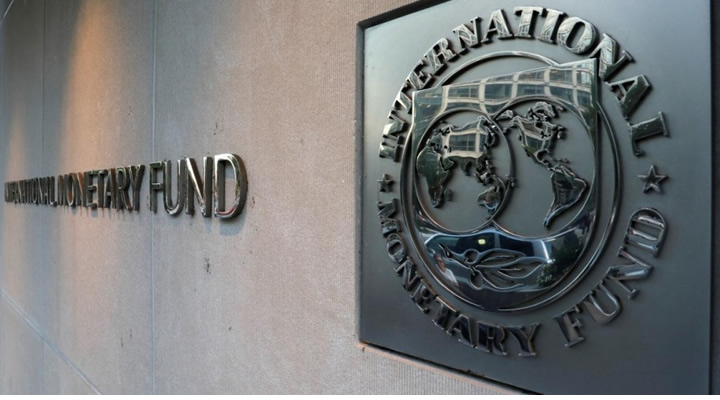
In a recent interview on Arise News Television’s Global Business Report show, Ari Aisen, the Resident Representative for the International Monetary Fund (IMF) in Nigeria, discussed the crucial factors that could attract more investments into the country. Aisen’s insights centered on the importance of lower inflation rates and predictable exchange rates as catalysts for economic growth and stability.

“If inflation can get lower and the exchange rate is more predictable, then investments can actually start coming into Nigeria. There are very green shoots of possibilities for the country. The potential has been there and will continue to be there,” Aisen remarked during the interview.

AlsoRead

World Bank Approves $1.25 Billion Loan for Nigeria to Drive Private Sector Growth

NNPC Lowers Petrol Price to N1,210 per Litre in Lagos and Abuja

Nigeria Records N366bn Drop in Exports to US as Imports Surge in Q1 2026

Aisen underscored the Nigerian government’s need to implement appropriate policies aimed at reducing the state’s financing needs. He particularly highlighted the significance of fiscal policy adjustments, pointing out the removal of fuel subsidies as a pivotal step in this direction.

“It is very important that policies are put in place, particularly fiscal policy, to reduce the financing needs of the government. The removal of fuel subsidy was a very important step because fuel subsidy cost two per cent of the GDP last year and it was adding to the financing needs and the debt stock of the country,” Aisen explained.

While acknowledging that the ongoing transition in Nigeria might entail some challenges, Aisen cautioned against any policy reversals, suggesting that the current trajectory would likely yield better results for the economy.

Aisen also emphasized the importance of safeguarding the interests of the country’s most vulnerable citizens during this period of transition, stating, “There is no simple solution to these problems. We always know that there will be some transition that would incur some pain to all involved. It is very important that the burden doesn’t fall on the most vulnerable this time, and both government and private sector, particularly the elite, come in and together promote a solution that actually saves the pain from those most vulnerable in the society.”

He expressed confidence that as Nigeria successfully navigates this transition, both domestic and foreign investments will return to the country, leading to job creation and inclusive growth.

Aisen concluded by addressing concerns about Nigeria’s total debt profile, asserting that it remains within the moderate range for a country of its size. He urged Nigerians to focus on addressing the root causes of the debt situation to ensure long-term economic stability and prosperity.

In light of Aisen’s remarks, it is evident that fostering an environment of lower inflation and predictable exchange rates, coupled with sound fiscal policies, is crucial for Nigeria’s economic development and attractiveness to investors. Moreover, protecting the vulnerable segments of society during the transition phase is imperative to ensure a fair and equitable economic recovery.

Tags: #inflation#NigeriaDebt Profileeconomic stabilityEconomic Transitionexchange ratesFiscal Policyfuel subsidyIMFinvestmentsVulnerable Population
Previous Post

Dave Limp to Replace Bob Smith as Blue Origin CEO Amidst Key Space Projects

Next Post

CBN Governor Vows to Address Forex Obligations and Inflation

Related News

World Bank Extends Nigeria’s Digital Identification Project Deadline Amid Missed Targets

World Bank Approves $1.25 Billion Loan for Nigeria to Drive Private Sector Growth

by Victoria Attah
July 2, 2026
0

The World Bank has approved a $1.25 billion Development Policy Financing loan for Nigeria as part of a broader strategy...

NNPC Lowers Petrol Price to N1,210 per Litre in Lagos and Abuja

by Akpan Edidong
July 2, 2026
0

The Nigerian National Petroleum Company (NNPC) Limited has reduced the retail price of petrol at its filling stations nationwide, citing...

FG Records N13.33bn Revenue Shortfall from Gas Flaring Penalties

Nigeria Records N366bn Drop in Exports to US as Imports Surge in Q1 2026

by Victoria Attah
June 30, 2026
0

Nigeria’s exports to the United States declined significantly by N365.64 billion in the first quarter of 2026, even as imports...

Nigeria’s Stock Market Records N1.81 Trillion Gain in July.

NGX Sheds N11.6 Trillion in June as Bull Run Hits Sharp Correction

by Jide Omodele
June 29, 2026
0

The Nigerian stock market has recorded one of its steepest monthly declines in recent years, losing approximately N11.6 trillion in...

Next Post
Meet Dr. Olayemi Cardoso the Proposed CBN Governor: Impact on Financial Markets

CBN Governor Vows to Address Forex Obligations and Inflation

Leave a Reply Cancel reply

Your email address will not be published. Required fields are marked *

Recommended

World Bank Extends Nigeria’s Digital Identification Project Deadline Amid Missed Targets

World Bank Approves $1.25 Billion Loan for Nigeria to Drive Private Sector Growth

July 2, 2026
Liquidity Crunch: Banking Sector’s Borrowing from CBN Surges to N12 Trillion.

NDIC Disburses N37.65 Billion to Customers of Failed Banks in 2025

July 2, 2026

Popular Story

  • Nigeria’s Debt to China Surges by $800 Million in One Year

    31 Nigerian States Grapple with N2.57 Trillion Domestic Debt Amid No Foreign Inflows

    0 shares
    Share 0 Tweet 0
  • FG Releases Revised Import Prohibition List, Bans Paracetamol, Tomato Paste and others.

    0 shares
    Share 0 Tweet 0
  • Dangote Refinery Cuts Petrol Price by N50 as Global Crude Costs Ease

    0 shares
    Share 0 Tweet 0
  • World Bank Approves $1.25 Billion Loan for Nigeria to Drive Private Sector Growth

    0 shares
    Share 0 Tweet 0
  • AfDB, ICIEC others agree on insurance platform

    0 shares
    Share 0 Tweet 0

RateCaptain

We bring you the most accurate in new and market data. Check our landing page for details.

  • Home
  • About Us
  • Privacy Policy
  • Terms & Conditions
  • Disclaimer
  • Cookie Policy
  • Contact Us

Copyright © 2022 RateCaptain - All rights reserved by RateCaptain.

No Result
View All Result
  • Home
    • About Us
    • Contact Us
  • FX Rates
  • Money Market
  • Cryptocurrency
  • Commodities
  • Corporates

Copyright © 2022 RateCaptain - All rights reserved by RateCaptain.

RateCaptain
Manage Cookie Consent
To provide the best experiences, we use technologies like cookies to store and/or access device information. Consenting to these technologies will allow us to process data such as browsing behavior or unique IDs on this site. Not consenting or withdrawing consent, may adversely affect certain features and functions.
Functional Always active
The technical storage or access is strictly necessary for the legitimate purpose of enabling the use of a specific service explicitly requested by the subscriber or user, or for the sole purpose of carrying out the transmission of a communication over an electronic communications network.
Preferences
The technical storage or access is necessary for the legitimate purpose of storing preferences that are not requested by the subscriber or user.
Statistics
The technical storage or access that is used exclusively for statistical purposes. The technical storage or access that is used exclusively for anonymous statistical purposes. Without a subpoena, voluntary compliance on the part of your Internet Service Provider, or additional records from a third party, information stored or retrieved for this purpose alone cannot usually be used to identify you.
Marketing
The technical storage or access is required to create user profiles to send advertising, or to track the user on a website or across several websites for similar marketing purposes.
  • Manage options
  • Manage services
  • Manage {vendor_count} vendors
  • Read more about these purposes
View preferences
  • {title}
  • {title}
  • {title}
?>