Sahara Group, a prominent African energy and infrastructure company, has unveiled ambitious plans to increase its crude oil production to 350,000 barrels per day (bbl/d) over the next five years. This expansion is part of a broader strategy to enhance its upstream operations and strengthen its position in Africa’s energy sector.
Leste Aihevba, Chief Technical Officer of Asharami Energy, a Sahara Group subsidiary, shared these goals during a strategic meeting held alongside the Africa Energy Week in Cape Town. Aihevba emphasized that the company’s growth will be fueled by improved exploration and production capabilities, supported by the acquisition of seven new oil rigs designed to boost efficiency.
“Collaboration across African nations is essential for establishing the continent as a global energy powerhouse,” Aihevba stated. He highlighted the importance of unified efforts in refinery upgrades, gas projects, and power reforms to create a sustainable energy future for Africa.
Strategic Investments in Infrastructure
Sahara Group’s infrastructure investments are transforming its operations, with a focus on expanding reserves and enhancing production. The acquisition of seven new rigs, including drilling and workover units, is a cornerstone of this strategy. These rigs will support Sahara’s target of producing 350,000 bbl/d of oil and 1,000,000 MMScf/d of gas in Nigeria within five years.
Two of the rigs are already operational in Nigeria, with two more expected to arrive by the end of 2025. One rig, the advanced 2000 HP Land rig named L-Buba, has begun drilling a gas development well, while another is being mobilized for an oil development well. These rigs, managed by Sahara’s Arahas Global Oilfield Services, reflect the company’s commitment to operational excellence and community partnerships.
“Our approach prioritizes shared prosperity, working closely with host communities and governments to build local expertise while remaining globally competitive,” Aihevba noted.
Driving Africa’s Energy Transition
Sahara’s investments extend beyond rigs to include human capital development, cross-border collaborations, and technology adoption. These efforts aim to accelerate Africa’s energy transition while ensuring inclusivity for local communities.
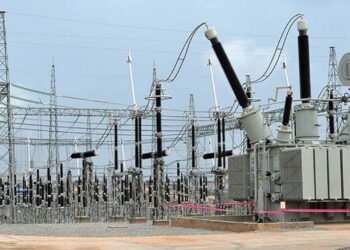
Recent data from the Nigerian Upstream Petroleum Regulatory Commission (NUPRC) indicates that Nigeria’s crude oil production rose by 5.5% year-on-year in August 2025, reaching 1.43 million barrels per day, achieving 96% of its OPEC quota of 1.5 million bpd. Sahara Group is also contributing to Nigeria’s energy sector through its Afam 2 Power Plant, which now supplies 160 megawatts to the national grid.
With these initiatives, Sahara Group is positioning itself as a leader in Africa’s energy landscape, driving sustainable growth and innovation across the continent