In the annals of international economics and politics, there are stories that serve as poignant reminders of the perils of overdependence on finite resources. Venezuela and Nigeria, once buoyed by their abundant oil reserves, now find themselves grappling with the consequences of their petrostate status. These nations, each uniquely impacted by their reliance on oil, offer crucial lessons and cautionary tales of mismanagement and economic instability that resonate globally.
Petrostates: A Double-Edged Sword
The term “petrostate” is used to describe countries whose government revenues hinge primarily on oil and natural gas exports. While these nations enjoy the financial windfall of their resource wealth, they often find themselves ensnared in a complex web of challenges:
Resource Dependency: The bulk of government income in petrostates is derived from exporting oil and natural gas. This heavy reliance on a single commodity renders them susceptible to the capricious fluctuations in global energy prices. The apparent economic stability that oil revenues provide can breed complacency and neglect in developing other sectors.
Economic and Political Inequality: Power and wealth tend to be concentrated in the hands of a select elite, while political institutions may be weak and tainted by corruption. These governance issues often contribute to social and political unrest, further complicating the path to stability.
Venezuela’s Tragic Tale
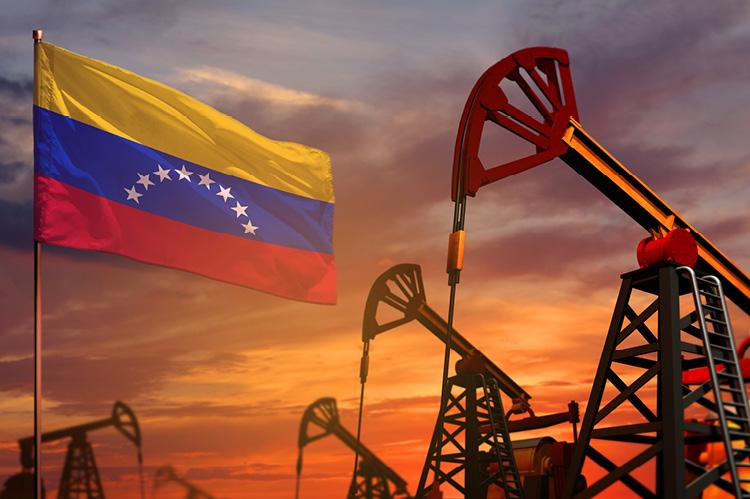
Venezuela, boasting the world’s largest oil reserves, stands as a stark example of a petrostate that has veered off course. Oil has been the lynchpin of its economic landscape for over a century, shaping its fortunes and, unfortunately, its misfortunes. In 2023, nearly two-thirds of the Venezuelan government’s budget is expected to be sustained by oil exports. This alarming level of dependence on a single commodity has left the nation acutely vulnerable to the capricious winds of global energy prices.
Venezuela’s oil output took a distressing hit in 2022, marking yet another year of dwindling production. This trend is a consequence of various factors, including the decay of critical infrastructure and a lack of technological upgrades. Between 2014 and 2021, Venezuela’s GDP contracted by a staggering 75 percent, resulting in widespread economic hardship. Citizens grapple with surging prices, reduced living standards, and chronic shortages of essential goods. These economic woes have fostered social and political unrest, further destabilizing the nation.
The country carries a colossal debt burden, estimated at around $150 billion. Managing such an overwhelming financial liability in the midst of a collapsing economy and diminishing revenue streams presents an insurmountable challenge. This debt crisis poses a grave threat to the nation’s economic recovery and long-term stability. The scourge of hyperinflation, which surpassed an astonishing 130,000 percent in 2018, wreaked havoc on Venezuela’s economy. While it has somewhat moderated in recent years, it still stood at an alarming 234 percent in 2022. This relentless devaluation of the national currency has eroded the purchasing power of citizens, rendering basic goods unaffordable for many.
Over the past decade, President Nicolas Maduro’s government has gradually eroded democratic norms and concentrated power. Internet restrictions, arbitrary arrests of political opponents, and the persecution of critics have become disconcerting hallmarks of the regime. These actions have severely curtailed civil liberties, impeding the populace’s ability to voice dissent and participate in the democratic process.
The cumulative impact of these challenges has given rise to a devastating humanitarian crisis in Venezuela. Citizens grapple with chronic shortages of essential goods, including food, water, fuel, and medical supplies. A November 2022 survey revealed that half of Venezuela’s 28 million residents live in poverty, although this represents a slight improvement from 2021.
Since 2014, over seven million Venezuelan refugees have sought sanctuary in neighboring nations and beyond, with many governments offering temporary residency. However, approximately 150,000 Venezuelan migrants have returned to their homeland in the wake of the pandemic, often after losing their jobs in other Latin American countries.
Venezuela’s Petrostate Plight
These dire circumstances, exacerbated by international sanctions and the COVID-19 pandemic, have fueled a severe humanitarian crisis. The population faces chronic shortages of essential goods like food, water, fuel, and medical supplies. In a November 2022 survey, it was revealed that half of Venezuela’s 28 million residents live in poverty, although this represents a slight improvement from 2021.
Since 2014, over seven million Venezuelan refugees have sought refuge in neighboring nations and beyond, with many governments offering temporary residency. Despite these challenges, approximately 150,000 Venezuelan migrants have returned to their homeland in the wake of the pandemic, often due to job losses in other Latin American countries.
Nigeria: A Cautionary Tale
The parallels with Venezuela resonate in Nigeria, Africa’s most populous nation, which, too, is heavily reliant on oil. The Nigerian economy has faced its own set of economic and political challenges, exacerbated by the decline in oil prices and a lack of diversified revenue sources. The new administration, under the leadership of President Tinubu, is actively pursuing a strategic shift away from oil dependency towards attracting foreign investments to bolster the nation’s foreign reserves. This approach is expected to contribute to the strengthening of the Naira’s valuation, marking a departure from the priorities of his predecessor, former President Buhari, who had primarily emphasized the development of the agricultural sector.
As the world watches Venezuela’s tragic descent, these petrostates serve as poignant reminders of the perils of overdependence on oil. Their experiences underscore the importance of diversified economies, robust governance, and prudent management of finite resources. The path to recovery and resilience may be arduous, but the lessons gleaned from these nations should not be overlooked by other resource-rich states.
In a changing global landscape where oil continues to wield significant influence, the need to diversify, govern wisely, and steward finite resources responsibly remains paramount.