RateCaptain
  • Home
    • About Us
    • Contact Us
  • FX Rates
  • Money Market
  • Cryptocurrency
  • Commodities
  • Corporates
No Result
View All Result
Subscribe
  • Home
    • About Us
    • Contact Us
  • FX Rates
  • Money Market
  • Cryptocurrency
  • Commodities
  • Corporates
No Result
View All Result
RateCaptain
No Result
View All Result
Home Economy

FG Saves N1.45 Trillion as Petrol Subsidy Removal Benefits Emerge

Akpan Edidong by Akpan Edidong
November 8, 2023
in Economy, Politics
Reading Time: 2 mins read
A A
0
FG Saves N1.45 Trillion as Petrol Subsidy Removal Benefits Emerge
Share on FacebookShare on TwitterShare on WhatsappShare on Telegram

In a significant fiscal development, the Federal Government of Nigeria has successfully saved approximately N1.45 trillion from the removal of subsidies on Premium Motor Spirit (PMS), commonly known as petrol, over a four-month period from June to September. This substantial savings figure, according to data from FAAC (Federation Account Allocation Committee) allocation documents, has been remitted into the Non-Oil Revenue (Savings) account of the government.

The breakdown of the funds remitted to the government account shows that N696.93 billion was recorded in June, followed by N389.7 billion in July, N71 billion in August, and N289 billion in September. This significant financial achievement has provided a significant boost to the government’s coffers.

AlsoRead

Nigeria’s External Reserves Drop by $731 Million in Early April

FG Releases Revised Import Prohibition List, Bans Paracetamol, Tomato Paste and others.

Nigeria’s Bond Yields Rise Slightly as DMO Prepares N700 Billion Auction

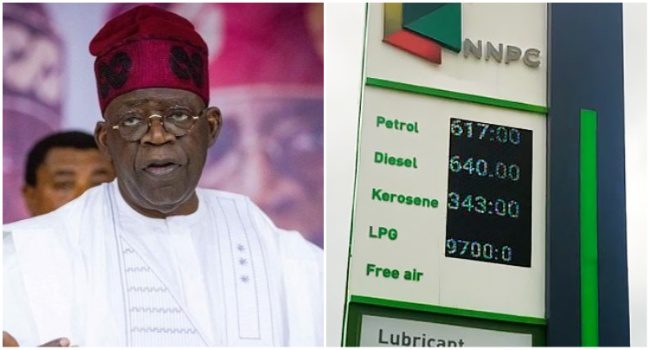
The removal of petrol subsidies was announced by President Bola Tinubu in his inaugural address on May 29, 2023, marking a transformative shift in the country’s economic policies. President Tinubu stated, “Subsidy is gone,” signifying a decisive move towards fiscal responsibility.

Before the removal of subsidies, the Nigerian National Petroleum Company Limited had incurred substantial costs in subsidy payments, totaling N1.828 trillion between January and May 2023. This amount represented a 55% increase compared to the corresponding period in 2022, highlighting the considerable financial burden the subsidies posed to the government.

The first four months of 2023 saw a breakdown of subsidy expenditures, with N274.769 billion in January, N477.742 billion in February, N415.381 billion in March, and N353.130 billion in April, respectively.

On August 1, 2023, President Bola Tinubu announced in a nationwide broadcast that the Federal Government had saved N1 trillion in just two months, June and July, since the removal of petrol subsidies. He emphasized that these saved funds, which were previously susceptible to exploitation by “smugglers and fraudsters,” would now be channeled into essential intervention programs benefiting families across the nation.

However, the government’s claims of savings have sparked discussions and inquiries. Trade Union Congress president, Festus Osifo, raised questions about the utilization of these saved funds, expressing concerns over the government’s borrowing practices. Osifo argued that with N1 trillion in savings, there should be no need for further borrowing, urging the government to direct a portion of the saved funds towards benefiting Nigerians.

In response to these inquiries, the Minister of Information and National Orientation, Mohammed Idris, clarified that the government had indeed made substantial savings through the subsidy removal. He explained that a significant portion of these funds had been transferred to state governments to help mitigate the impact of the policy on the Nigerian populace. Minister Idris emphasized that state governments, being closer to the people, were well-positioned to deliver effective relief measures.

While the exact amount of savings transferred to state governments was not disclosed, the minister assured that the initiative was an ongoing effort. The removal of petrol subsidies and the subsequent savings have become a focal point in Nigeria’s economic landscape, with continued scrutiny and debate over how these funds are being utilized to benefit the nation’s citizens.
Tags: FAAC allocationFederal Governmentfiscal responsibilityfiscal savingsintervention programsNigerian National Petroleum Company LimitedPetrol subsidiesPresident Bola TinubuState Governmentssubsidy removalTrade Union Congress
Previous Post

Foreign Airlines Struggle as $783 Million in Trapped Funds Remain Unpaid

Next Post

First Bank Job Opening: Category Specialist

Related News

CBN Supplies $29.5 Million at FX Auction as Naira Depreciates at I&E Window.

Nigeria’s External Reserves Drop by $731 Million in Early April

by Jide Omodele
April 28, 2026
0

Nigeria’s foreign exchange reserves came under renewed pressure in April 2026, declining by approximately $731 million within the first three...

The Double-Edged Sword of VAT in Nigeria: Exploitation or Economic Lifeline?

FG Releases Revised Import Prohibition List, Bans Paracetamol, Tomato Paste and others.

by Victoria Attah
April 28, 2026
0

The Federal Government has released a revised schedule of prohibited trade items as part of efforts to deepen economic reforms,...

DMO Announces Subscription Offering for Federal Government Savings Bonds.

Nigeria’s Bond Yields Rise Slightly as DMO Prepares N700 Billion Auction

by Jide Omodele
April 28, 2026
0

Nigeria’s sovereign bond market ended the week on a cautious note, with average yields edging higher as investors adopted a...

Federal Government to Generate N12bn Annually from new vehicle tax.

Nigeria Revenue Service Denies Introduction of New Vehicle Tax

by Victoria Attah
April 27, 2026
0

The Nigeria Revenue Service (NRS) has firmly debunked a viral infographic claiming that the Federal Government has introduced a new...

Next Post
First Bank Job Opening: Category Specialist

First Bank Job Opening: Category Specialist

Leave a Reply Cancel reply

Your email address will not be published. Required fields are marked *

Recommended

IMF Cautions Central African Republic against Adopting Bitcoin

Bitcoin Tests $80,000 Resistance as It Remains Range-Bound Ahead of FOMC Decision

April 29, 2026
Naira appreciated to N738/$ in the Parallel Market

Naira Weakness Pushes Foreign Currency Taxes to N6.33 Trillion in 2025

April 29, 2026

Popular Story

  • IMF Lists Top 10 African Nations with Highest Debt Burdens

    OECD Reports 7.1% Decline in International Aid in 2024

    0 shares
    Share 0 Tweet 0
  • IMF Identifies High Inflation as a Major Hardship for Nigerians

    0 shares
    Share 0 Tweet 0
  • FG issues 2,400 Cs-of-O, 1,417 land transaction consents

    0 shares
    Share 0 Tweet 0
  • India to propose cryptocurrency ban

    0 shares
    Share 0 Tweet 0
  • Lai Mohammed Slams Media Houses for Celebrating End-SARS Panel Report

    0 shares
    Share 0 Tweet 0

RateCaptain

We bring you the most accurate in new and market data. Check our landing page for details.

  • Home
  • About Us
  • Privacy Policy
  • Terms & Conditions
  • Disclaimer
  • Cookie Policy
  • Contact Us

Copyright © 2022 RateCaptain - All rights reserved by RateCaptain.

No Result
View All Result
  • Home
    • About Us
    • Contact Us
  • FX Rates
  • Money Market
  • Cryptocurrency
  • Commodities
  • Corporates

Copyright © 2022 RateCaptain - All rights reserved by RateCaptain.

RateCaptain
Manage Cookie Consent
To provide the best experiences, we use technologies like cookies to store and/or access device information. Consenting to these technologies will allow us to process data such as browsing behavior or unique IDs on this site. Not consenting or withdrawing consent, may adversely affect certain features and functions.
Functional Always active
The technical storage or access is strictly necessary for the legitimate purpose of enabling the use of a specific service explicitly requested by the subscriber or user, or for the sole purpose of carrying out the transmission of a communication over an electronic communications network.
Preferences
The technical storage or access is necessary for the legitimate purpose of storing preferences that are not requested by the subscriber or user.
Statistics
The technical storage or access that is used exclusively for statistical purposes. The technical storage or access that is used exclusively for anonymous statistical purposes. Without a subpoena, voluntary compliance on the part of your Internet Service Provider, or additional records from a third party, information stored or retrieved for this purpose alone cannot usually be used to identify you.
Marketing
The technical storage or access is required to create user profiles to send advertising, or to track the user on a website or across several websites for similar marketing purposes.
  • Manage options
  • Manage services
  • Manage {vendor_count} vendors
  • Read more about these purposes
View preferences
  • {title}
  • {title}
  • {title}
?>