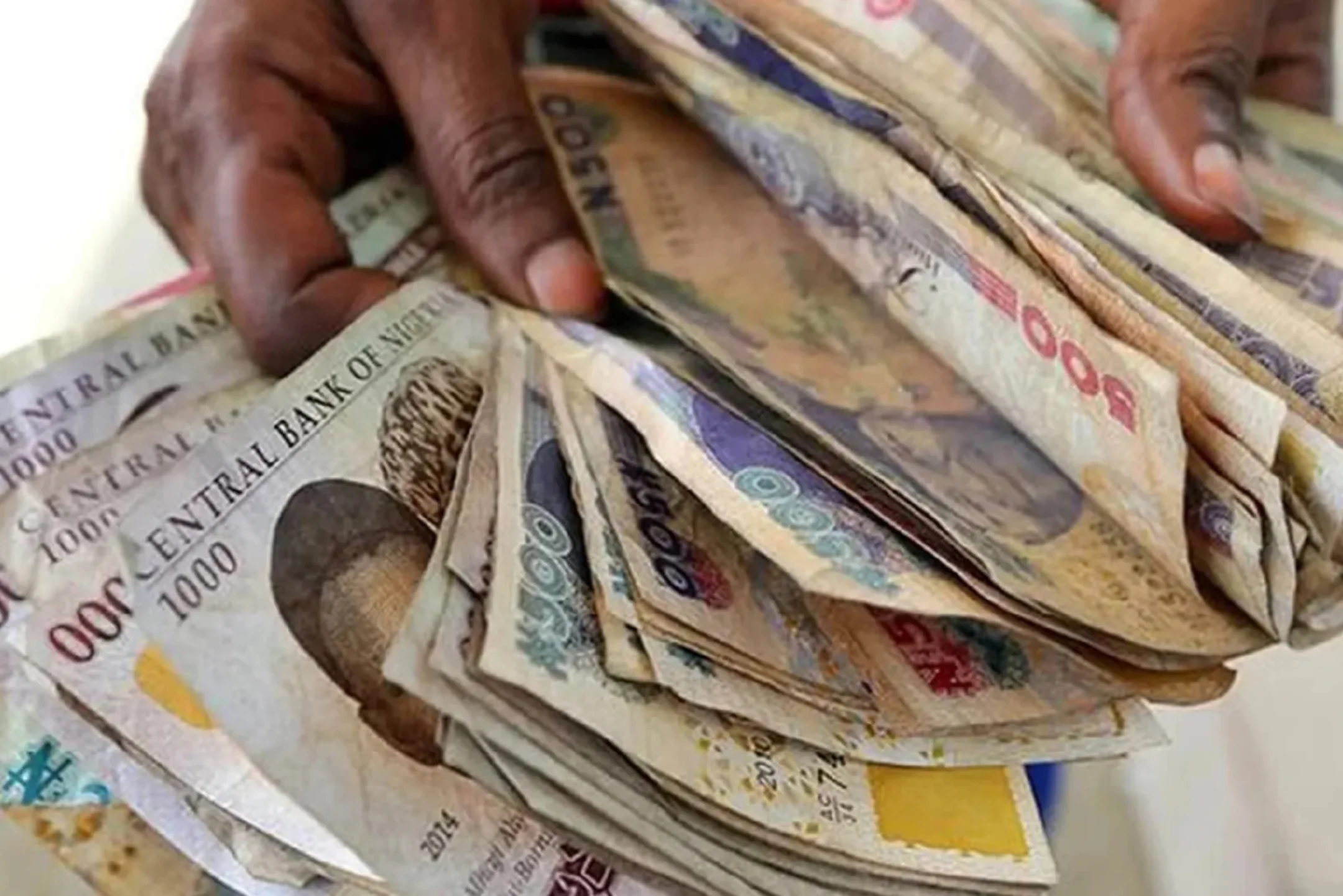
Nigeria’s broad money supply (M2) contracted by 1.58% month-on-month to N117.8 trillion in September 2025, down from N119.7 trillion the previous month, as lending to the real economy fell sharply amid the Central Bank of Nigeria’s (CBN) sustained monetary tightening.
Data released Tuesday from the CBN’s Money and Credit Statistics for September showed most liquidity components retreating, with the exception of physical cash in circulation.
Quasi-money—comprising time and savings deposits—dropped 1.99% to N78.7 trillion from N80.3 trillion. Narrow money (M1) eased 0.76% to N39.1 trillion, while demand deposits slipped 0.86% to N34.6 trillion. Currency outside banks, however, edged up 0.45% to N4.47 trillion.
The contraction stemmed primarily from a 2.1% reduction in total credit to the economy, which fell to N96.7 trillion from N98.8 trillion. Private-sector lending bore the brunt, declining 4.4% to N72.5 trillion from N75.9 trillion.
A 5.67% rise in government borrowing to N24.2 trillion from N22.9 trillion partially offset the private-sector pullback but was insufficient to stem the overall credit slowdown.
Analysts attribute the liquidity squeeze to the CBN’s aggressive policy stance, which has seen the Monetary Policy Rate hiked by over 800 basis points since mid-2023 to combat persistent double-digit inflation. The tighter conditions have constrained bank lending and curbed monetary expansion.