RateCaptain
  • Home
    • About Us
    • Contact Us
  • FX Rates
  • Money Market
  • Cryptocurrency
  • Commodities
  • Corporates
No Result
View All Result
Subscribe
  • Home
    • About Us
    • Contact Us
  • FX Rates
  • Money Market
  • Cryptocurrency
  • Commodities
  • Corporates
No Result
View All Result
RateCaptain
No Result
View All Result
Home Economy

Nigeria’s Inflation Reaches 18-Year High, Government Implements Reforms to Tackle Rising Costs

Stephen Akudike by Stephen Akudike
September 13, 2023
in Economy
Reading Time: 2 mins read
A A
0
Nigeria’s Inflation Reaches 18-Year High, Government Implements Reforms to Tackle Rising Costs
Share on FacebookShare on TwitterShare on WhatsappShare on Telegram

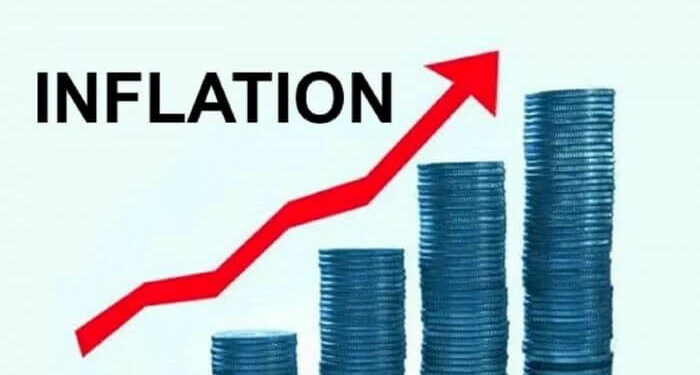
Nigeria is facing its highest inflation rate in 18 years, with reports indicating that it reached approximately 24 percent in June. The country’s economic intelligence reports from leading firms highlight the surge in inflation, primarily driven by soaring food and energy costs and currency depreciation. The sustained increase in inflation over the past six months has put significant pressure on the cost of living for Nigerians.

The inflation rate, which stood at 22.41 percent in May, has now risen even further, becoming a critical concern for the nation’s economy. Factors such as ongoing food shortages, skyrocketing energy expenses, and the devaluation of the Nigerian naira have collectively contributed to this inflationary surge.

AlsoRead

Is the World Underestimating Nigeria?

Dangote Refinery Reduces Aviation Fuel Price to N1,650 per Litre

CBN Denies Heavy Intervention in FX Market, Highlights Minimal Participation

Despite the alarming inflation figures, analysts remain hopeful that the government’s ongoing fiscal and monetary reforms will help alleviate the cost of living in the near future. The authorities have implemented various policy interventions in the food sector, with President Bola Tinubu declaring a state of emergency on food security.

To mitigate the impact of subsidy removal, immediate releases of fertilizers and grains to farmers’ households have been initiated. The government is also taking additional measures, including the establishment of a National Commodity Board to continuously review and assess food prices. Strategic food reserves will be maintained to stabilize prices for essential grains and other food items. Furthermore, the activation of 500,000 hectares of land for farming, enhanced irrigation through river basins, improved farm security, and the creation of ranches are among the crucial steps being taken.

Earlier this year, inflation rates have been steadily rising, starting from 21.9 percent in February 2023 and progressing to 22.04 percent, 22.22 percent, and 22.41 percent in March, April, and May 2023, respectively.

Financial Derivatives Company (FDC), a reputable independent economic and finance research firm, projects that inflation could reach 22.8 percent in June, marking the highest point in 18 years. While the situation remains challenging, experts are cautiously optimistic that the ongoing reforms will gradually help moderate inflation and set the economy on a path of strong growth in the medium to long term.

The escalating inflation rate poses significant challenges for ordinary Nigerians as the cost of living becomes increasingly burdensome. As the official inflation report for June is awaited, attention will be focused on the effectiveness of the government’s reforms and policy measures in tackling inflationary pressures and restoring economic stability.

The government, in collaboration with economic analysts and experts, will continue to devise strategies to address the root causes of inflation and create an environment conducive to sustainable economic growth and stability. The outcome of these efforts will be crucial in determining Nigeria’s path towards economic recovery and improved living conditions for its citizens.
Tags: #economy#Nigeriaagricultural measurescost of livingcurrency depreciationeconomic stabilityenergy expensesFinancial Derivatives Companyfiscal reformsfood securityfood shortagesgovernment interventionsinflation ratemonetary reformsNational Commodity Boardrising costsstrategic food reservessustainable growth
Previous Post

Navigating the Complexities of Digital Lending: Why Outright Bans are not the Solution.

Next Post

Petrol Consumption Reduced to 46.34 Million Litres per Day Following Subsidy Removal- NMDPRA.

Related News

Exploring the data on multidimensional and monetary poverty in Nigeria.

Is the World Underestimating Nigeria?

by Stephen Akudike
May 21, 2026
0

For years, conversations about the future of global power have sounded familiar. China. The United States. India. Perhaps the European...

Airlines Implement Time-Saving Strategies for More Efficient Operations

Dangote Refinery Reduces Aviation Fuel Price to N1,650 per Litre

by Akpan Edidong
May 21, 2026
0

Dangote Petroleum Refinery & Petrochemicals has announced a significant reduction in the price of Jet A1 (aviation fuel), slashing it...

NEC Affirms CBN $3 Billion Loan for Naira Stability

CBN Denies Heavy Intervention in FX Market, Highlights Minimal Participation

by Jide Omodele
May 21, 2026
0

The Central Bank of Nigeria (CBN) has refuted allegations of aggressive intervention in the foreign exchange market, insisting that its...

World Bank Emphasizes Cash Transfers to Break Poverty Cycle in Nigeria

Global Carbon Pricing Revenue Surpasses $107 Billion in 2025 – World Bank

by Victoria Attah
May 20, 2026
0

The World Bank has reported that revenues generated from carbon pricing mechanisms worldwide exceeded $107 billion in 2025, marking another...

Next Post
Petrol Consumption Reduced to 46.34 Million Litres per Day Following Subsidy Removal- NMDPRA.

Petrol Consumption Reduced to 46.34 Million Litres per Day Following Subsidy Removal- NMDPRA.

Leave a Reply Cancel reply

Your email address will not be published. Required fields are marked *

Recommended

Exploring the data on multidimensional and monetary poverty in Nigeria.

Is the World Underestimating Nigeria?

May 21, 2026
Standard Chartered Bank Job Opening: Data Analyst

End Times : Standard Chartered to Cut Over 7,800 Jobs Worldwide Due to AI

May 21, 2026

Popular Story

  • Nigeria’s Debt to China Surges by $800 Million in One Year

    31 Nigerian States Grapple with N2.57 Trillion Domestic Debt Amid No Foreign Inflows

    0 shares
    Share 0 Tweet 0
  • UBA Earnings Hits N494bn, Records N106.8bn Profit

    0 shares
    Share 0 Tweet 0
  • Parallex Bank gets $10m trade finance facility from Afreximbank.

    0 shares
    Share 0 Tweet 0
  • CBN Suspends Charges on Cash Deposits Until September 30, 2024

    0 shares
    Share 0 Tweet 0
  • Naira Weakens in Nigerian FX Market as U.S. Fed Meeting Takes Center Stage

    0 shares
    Share 0 Tweet 0

RateCaptain

We bring you the most accurate in new and market data. Check our landing page for details.

  • Home
  • About Us
  • Privacy Policy
  • Terms & Conditions
  • Disclaimer
  • Cookie Policy
  • Contact Us

Copyright © 2022 RateCaptain - All rights reserved by RateCaptain.

No Result
View All Result
  • Home
    • About Us
    • Contact Us
  • FX Rates
  • Money Market
  • Cryptocurrency
  • Commodities
  • Corporates

Copyright © 2022 RateCaptain - All rights reserved by RateCaptain.

RateCaptain
Manage Cookie Consent
To provide the best experiences, we use technologies like cookies to store and/or access device information. Consenting to these technologies will allow us to process data such as browsing behavior or unique IDs on this site. Not consenting or withdrawing consent, may adversely affect certain features and functions.
Functional Always active
The technical storage or access is strictly necessary for the legitimate purpose of enabling the use of a specific service explicitly requested by the subscriber or user, or for the sole purpose of carrying out the transmission of a communication over an electronic communications network.
Preferences
The technical storage or access is necessary for the legitimate purpose of storing preferences that are not requested by the subscriber or user.
Statistics
The technical storage or access that is used exclusively for statistical purposes. The technical storage or access that is used exclusively for anonymous statistical purposes. Without a subpoena, voluntary compliance on the part of your Internet Service Provider, or additional records from a third party, information stored or retrieved for this purpose alone cannot usually be used to identify you.
Marketing
The technical storage or access is required to create user profiles to send advertising, or to track the user on a website or across several websites for similar marketing purposes.
  • Manage options
  • Manage services
  • Manage {vendor_count} vendors
  • Read more about these purposes
View preferences
  • {title}
  • {title}
  • {title}
?>